

Launching a digital news portal is not only a website project. It is the creation of a repeatable publishing system. The strongest launches connect brand identity, editorial rules, team responsibilities, distribution, search visibility, and reader communication before the first major story is promoted.
1. Define the publication before designing it
Write a one-sentence promise that explains who the publication serves and what readers can expect. A regional newsroom might focus on verified civic updates, business activity, culture, and community reporting. A specialist publication may cover one industry or professional audience. This promise should guide categories, tone, homepage priorities, and future hiring.
Choose a name that is easy to read, spell, and remember. Confirm that the domain and social profile names you intend to use do not create confusion with an existing organization. Prepare a square logo, a horizontal wordmark, a favicon, one primary brand color, a short tagline, and a concise publication description.
2. Build the information structure
Create a small set of useful categories before publishing content. Each category should describe a real reader need rather than an internal department. Avoid launching with dozens of empty sections. A focused structure is easier to navigate, easier to maintain, and clearer to search engines.
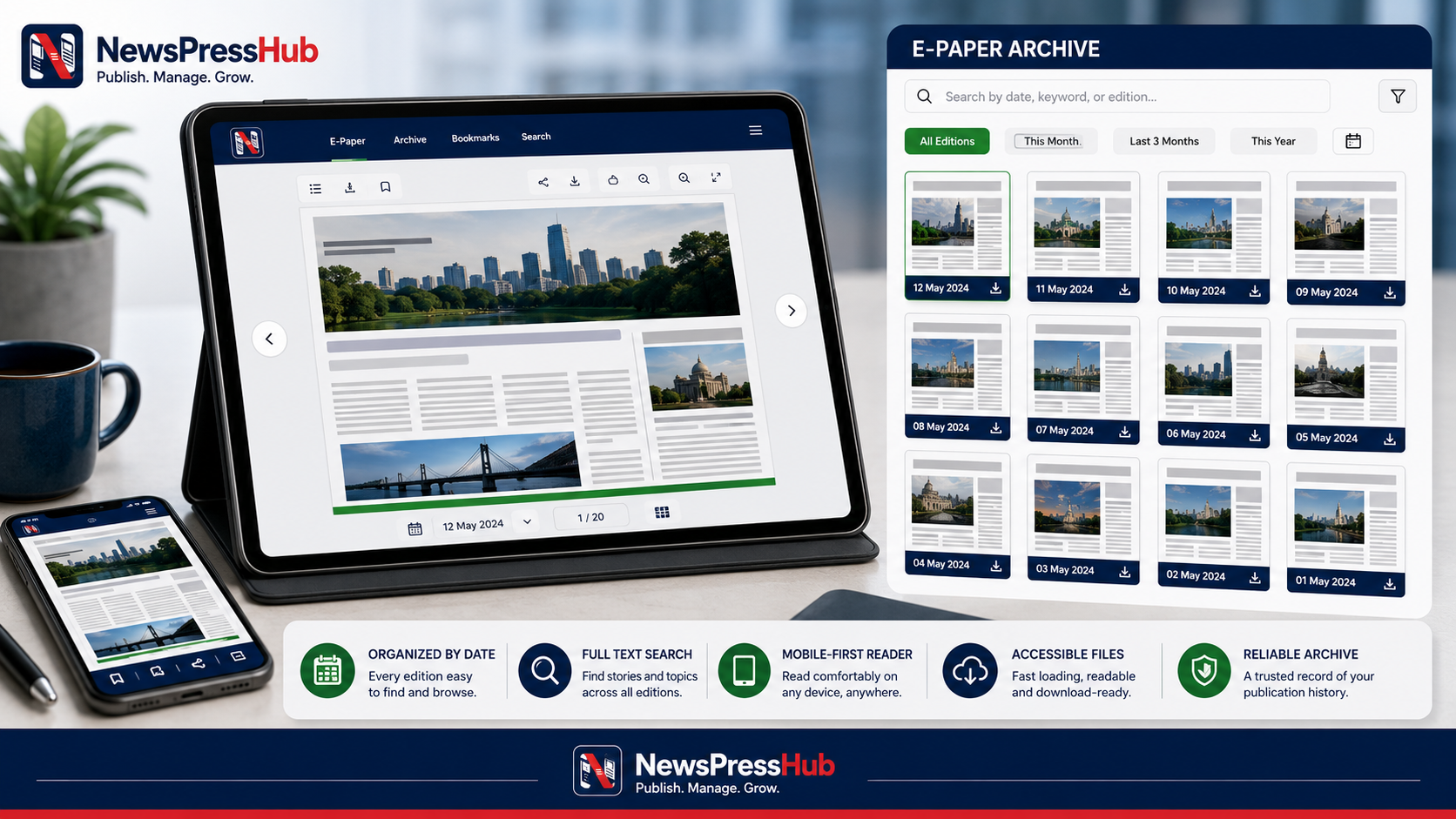
Decide how the newsroom will use standard news, breaking updates, editorial blogs, and e-paper editions. These formats serve different purposes. A breaking update should be concise and linked to the most relevant story. A feature or analysis article needs more context. An e-paper is best treated as a dated edition with a clear cover and accessible archive.
3. Configure the public identity
Set the publication domain, product domain, website template, logos, favicon, contact information, and About page. Review the site on desktop and mobile. Every public page should show the same name, colors, contact details, and editorial identity.
Prepare essential policies such as Privacy, Terms, and Refund or Cancellation where applicable. Policy language should match the services you actually provide and the laws relevant to your organization. When legal certainty matters, ask a qualified professional to review the final wording.
4. Create a controlled publishing workflow
Document who may create, review, publish, correct, and archive content. For each story, require a title, category, publish date, clear description, complete article body, appropriate image, reading time, keywords, and accurate SEO fields. Draft status should mean the story is not yet ready for readers.
If reporters are added, give each person only the access required for their role. Keep agency assignments clear and review inactive accounts. A reporter limit is not merely a billing number; it is also an opportunity to keep access deliberate and auditable.
5. Prepare discovery and distribution
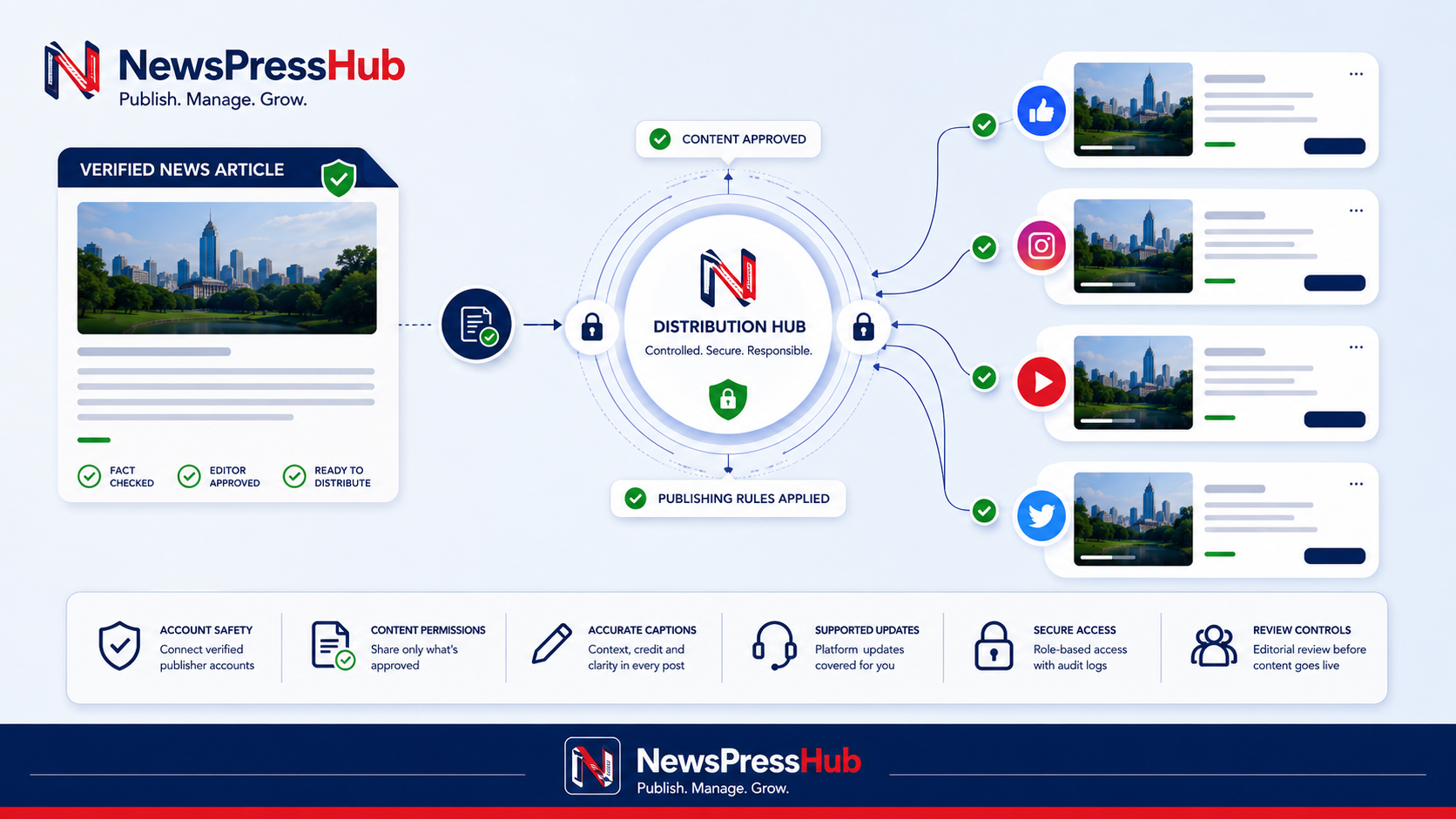
Write a unique meta title and meta description for important pages and articles. Use descriptive image alt text, readable URLs, and accurate canonical links. If connected social publishing is enabled, confirm the correct account, supported content type, public article link, image rights, and final caption before activating automation.
6. Run a launch-day quality check
- - Open every navigation and footer link.
- - Test registration, login, contact forms, and subscriber forms.
- - Check the domain, favicon, social sharing preview, and mobile layout.
- - Publish several complete stories across the categories readers will see.
- - Confirm that drafts and inactive records are not publicly visible.
- - Prepare a correction method and a support contact.
A professional news launch is not defined by the number of pages. It is defined by whether the team can publish accurate, consistent work every day.
NewsPressHub brings branding, templates, categories, newsroom content, reporter access, e-paper publishing, SEO, public policies, and plan-based tools into one operating flow. Use the platform as the structure, then apply your own editorial standards, local knowledge, and responsible review process.