

Small newsrooms often work under two pressures at once: publish quickly and avoid preventable mistakes. Speed becomes safer when the team agrees on a simple workflow that applies to routine stories, urgent updates, editorial blogs, and corrections.
Start with clear content states
Use a small number of states that everyone understands. “Draft” means the item is incomplete or awaiting review. “Ready” means required checks are complete. “Published” means it is approved for the public site. “Archived” means the content remains part of the record but is no longer promoted. Avoid using an active status simply to save unfinished work.
Each story should have one responsible owner. Other team members may contribute, but the owner confirms that the required fields, media, links, and publication status are correct.
Use a category-first structure
Create and activate the correct category before writing dependent content. Categories should be stable enough to help readers browse the site and specific enough to describe the subject. When reporters use the same category system, the public website stays organized and the editorial team spends less time repairing inconsistent labels.
Apply a practical pre-publication check
- Title: accurate, specific, and supported by the article.
- Body: complete context, readable paragraphs, and clear attribution where needed.
- Date and status: intentional, especially for scheduled or draft content.
- Media: owned, licensed, or otherwise permitted, with no misleading edits.
- Links: relevant, working, and directed to the intended public page.
- SEO: a unique meta title, useful description, and focused keywords.
This checklist is short enough for daily use. A longer checklist that nobody follows creates the appearance of control without the benefit.
Separate breaking updates from full stories
A breaking-news item should communicate only what is confirmed and direct readers to a fuller report when one exists. Avoid turning a short alert into a place for speculation. As the situation develops, update the linked story, keep timestamps clear, and remove or deactivate outdated alerts when they could confuse readers.
Design corrections as part of publishing
Errors should not be handled through silent improvisation. Decide who can edit a published record, what changes require an editor, and when a correction note is appropriate. Preserve the difference between a minor spelling fix and a material factual correction. A clear correction practice protects readers and helps the team learn from recurring problems.
Keep social distribution downstream of review
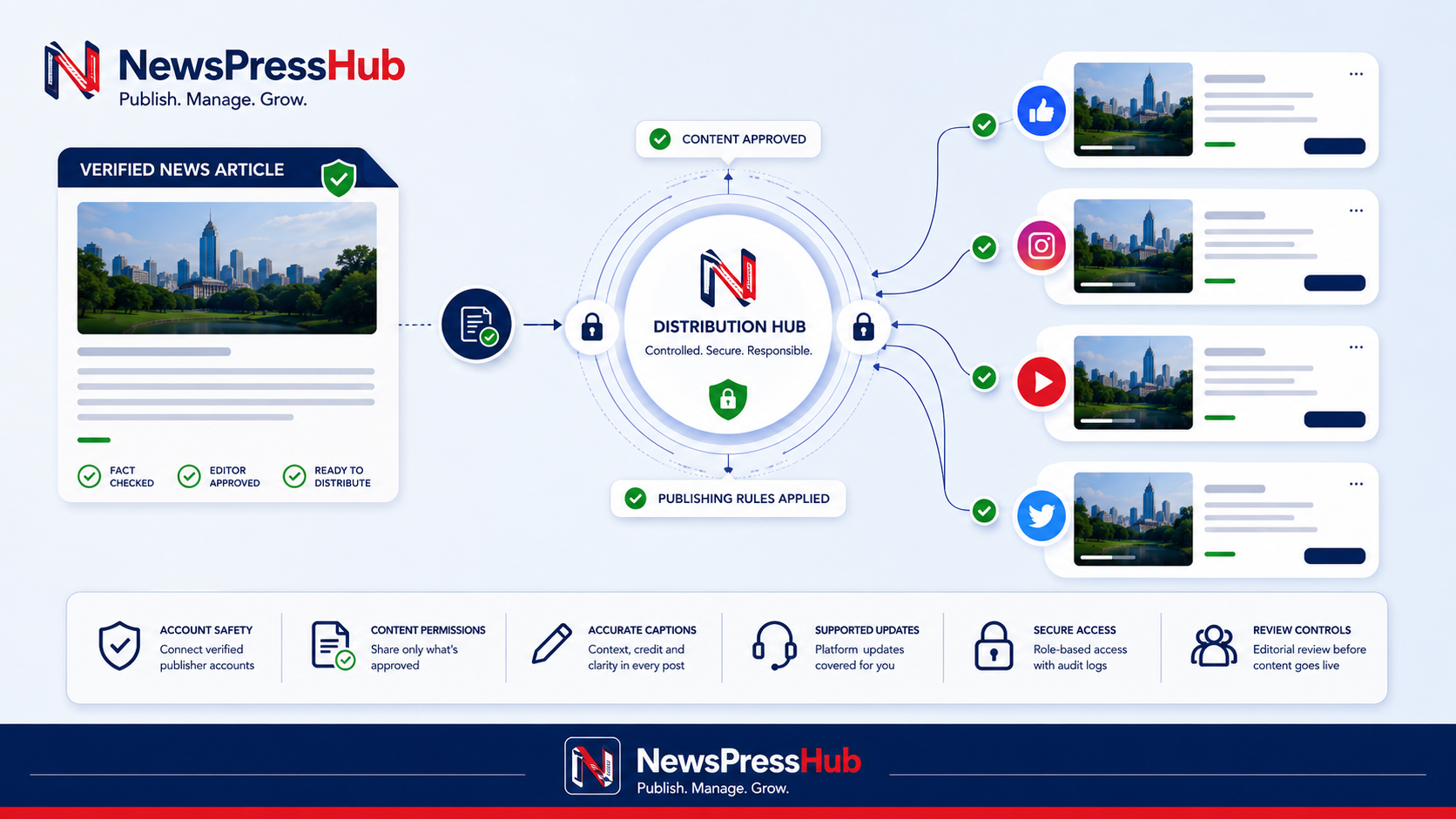
Connected social publishing can reduce repetitive work, but it should never become the approval step. The article, image, public URL, account connection, and platform toggles must be correct before automated distribution begins. If a platform does not support a particular edit, review the supported update or replacement process before changing the original story.
Review access, not only content
Agency owners should periodically review reporter accounts, invitations, agency membership, and status. Remove access that is no longer required. Confirm that a reporter is working inside the correct agency and that plan limits match the intended team size.
End each publishing cycle with a public check
After publication, open the public article from the actual agency domain. Check the headline, image, category, author, date, mobile layout, video, related links, and sharing preview. This final step catches problems that are invisible inside an admin form.
The goal of workflow is not to add bureaucracy. It is to make the next correct action obvious, even on a busy news day.
NewsPressHub provides the content states, category structure, role separation, public templates, SEO fields, and optional distribution controls needed to support this process. The newsroom remains responsible for verification, editorial judgment, permissions, and the final decision to publish.